Rack-Level Resilience: Water Monitoring for Britain’s Smaller Data Centres and Edge Rooms
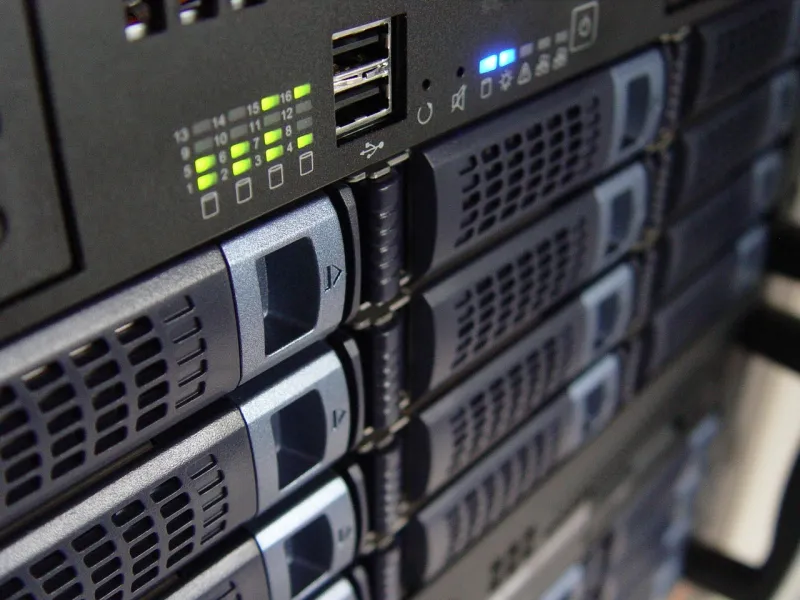
Photo: server room raised floor water leak sensor data centre UK, via cdn.pixabay.com
Britain’s digital estate is becoming more distributed. Edge computing, local content caching and latency-sensitive services are pushing IT capacity into smaller server rooms, converted comms cupboards and shared commercial buildings. These facilities may be modest in floor area, but they often contain the same water-bearing services as larger sites: condensate drains from cooling units, humidifiers, liquid-cooling loops and the occasional domestic water supply for cleaning or welfare areas.
The difference is often one of discipline. A large data centre may have a facilities team, a building management system and a documented water risk regime. A small edge site may have none of these, or may rely on a visiting engineer and a remote operations rota. That is where a proportionate water-monitoring playbook becomes valuable. The aim is not to replicate a hyperscale facility in miniature, but to match protection to consequence.
Why a small leak can be a large event
In a domestic property, a leak of a few litres per hour may stain a ceiling or dampen a floor before it is noticed. In a server room, the same volume can be far more damaging because of where it travels and what it reaches. Water follows cable trays, containment, conduit and raised-floor voids. It can pool beneath floor tiles, reach power distribution units, compromise uninterruptible power supplies and raise humidity around sensitive electronics. A small, steady leak may remain hidden until corrosion, insulation failure or an electrical trip reveals it.
The asymmetry matters. The cost is not measured only by the water lost, but by service interruption, emergency call-out, component replacement and the difficulty of proving to an insurer that reasonable precautions were in place. In 2026, with more computing capacity sitting in leased and unmanned spaces, that exposure is easy to overlook.
Begin with a water map, not a shopping list
Before specifying sensors, document every water source and route in the room. Include condensate drains from close control units, humidifier feed and drain lines, liquid-cooling manifolds and quick-release couplings, any local taps, and the location of isolation points. Mark low points, floor slopes, cable penetrations and electrical equipment adjacent to water routes. A simple plan, kept current, is more useful than an elaborate sensor list that nobody can interpret.
Use a three-part risk score: likelihood of leakage, consequence if leakage occurs, and frequency of human presence. A condensate drain serving a critical rack in an unmanned room should rank higher than a rarely used cleaning tap. This allows capital and maintenance effort to follow consequence rather than fashion.
Condensate drains deserve first attention
Condensate is the most common water source in small IT rooms and often the least monitored. It is produced continuously when cooling units run, and it can fail quietly through blocked traps, algae growth, incorrect falls, crushed flexible sections or failed condensate pumps. A secondary drip tray with a float switch is a modest addition, but it must be positioned to catch the likely failure point and wired to an alarm that someone will see.
Inspection should be scheduled rather than reactive. Quarterly checks of drain pans, traps and pump operation are reasonable for many small sites, with more frequent checks in dusty or humid locations. Where condensate is routed away from the room, confirm that the route remains intact and does not discharge near electrical equipment or building fabric.
Liquid cooling: watch the loop, not only the floor
Small liquid-cooled IT rooms are becoming more common, particularly where high-density racks are installed in spaces not designed for large air-cooling systems. These loops introduce pressurised coolant, manifolds, flexible hoses and couplings into the room. Monitoring should focus on pressure and flow trends, visible weep points at manifolds and drip trays beneath cooling distribution units.
Not every small site needs automated shut-off on a cooling loop. Indeed, isolating a critical loop without a designed fail-safe could create a different outage. A pressure-drop alarm, a drip sensor at the manifold and a documented response procedure may be more appropriate. Coolant chemistry and compatibility should follow the equipment vendor’s guidance, not a generic water-treatment assumption.
Underfloor and in-rack detection
Raised floors hide leaks but also make detection harder. Point sensors at likely pooling locations, rope detection along containment routes and spot sensors beneath cooling units can provide early warning without covering every tile. In-rack sensors are useful where local cooling or pipework enters the rack itself. The key is to map every sensor identifier to a physical location and to test it using the manufacturer’s method.
Integration with a building management system or DCIM platform is helpful, but a standalone alarm that rings, texts or calls is better than an integrated system nobody monitors. For unmanned sites, telemetry should include a heartbeat signal so that a failed gateway or lost connection is treated as an alarm condition, not silence.
Isolation and escalation for unmanned rooms
Automatic isolation valves can limit damage from a burst domestic supply, but they must be applied selectively. They are well suited to domestic water feeds serving taps or non-critical areas. They are less straightforward on cooling loops, where premature isolation may cause overheating. Where automatic valves are used, provide manual bypass, clear labelling and a documented procedure for remote staff.
Alarm escalation should be two-stage. A local sounder helps anyone on site; a remote notification reaches the operations rota. Use a call or SMS escalation path rather than email alone, and define who attends, how quickly and what they are authorised to isolate. Test the escalation annually and after any change to the rota or telemetry provider.
A proportionate sequence
A sensible first phase is passive leak detection at likely failure points, float switches on condensate trays, clear labelling of isolation valves and a named response rota. A second phase adds remote telemetry, pressure and flow monitoring on cooling loops, and environmental sensors. A third phase considers automatic isolation where the risk and system design justify it.
This sequence avoids overengineering while building genuine resilience. The objective is not to eliminate every drop, but to detect water early, understand where it will travel, and ensure that someone with authority responds before a small server-room leak becomes a service interruption.