The Invisible Drought at the End of the Lane: Instrumenting Britain's Off-Mains Water Systems
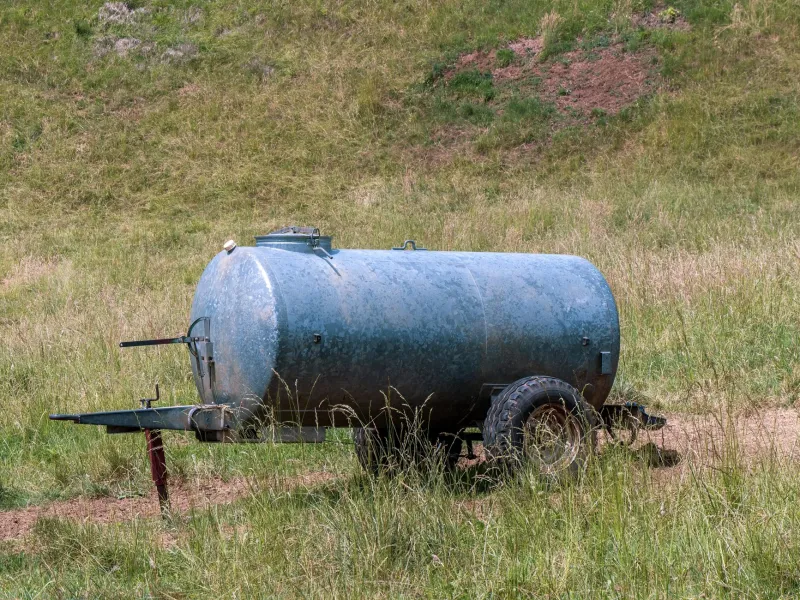
For most British properties, water arrives as an assumed service: pressurised, treated and monitored somewhere upstream. For a rural home, farm, holiday let or small business at the end of a lane, the supply is a private piece of infrastructure. It may depend on a borehole, a spring, a well or a harvested source, and its failure is rarely theatrical. More often, a pump begins to cycle more frequently, a storage tank sits a little lower each morning, or a filter clogs sooner than it did last season. By the time the taps splutter, the problem has usually been developing for weeks.
Why private supplies fail quietly
A private water system is a chain: source, pump, pressure vessel, storage, treatment and distribution. Each link has slow failure modes. A pump may short-cycle because a pressure vessel has lost its charge. A source may yield less after a dry spell, forcing the pump to run longer. Sediment may build up in a chamber or filter housing. A UV lamp may reach the end of its effective life while still glowing. A softener may run out of salt, or a filter may be bypassed during maintenance and never returned to service.
Unlike a mains connection, there is no utility telemetry watching any of this. The occupant is, in effect, the operator. That is manageable when someone is present and attentive. It is less manageable for a holiday let, a small food business, a farm with livestock or a home where the occupants travel. The central risk is not a single dramatic burst; it is the accumulation of small deviations that no one sees.
The signals worth watching
Monitoring an off-mains supply should be proportionate. A few well-chosen measurements will catch most expensive failures.
Pump run-time and starts per hour. This is the clearest indicator of pump health and source condition. A pump that runs for twenty minutes when its normal cycle is six deserves attention. Frequent starts can point to a failed pressure vessel, a leak or a demand pattern change. Long continuous running can indicate a dropping water table, a blocked intake or a leak downstream. Alerts on both patterns help prevent dry running and motor burnout.
Storage tank level. A level sensor gives warning before an outage. It also reveals unexpected draw-down: a leaking trough, a stuck valve, a hidden pipe leak or a change in occupancy. For a business, a low-level alert can be the difference between a managed top-up and a lost trading day.
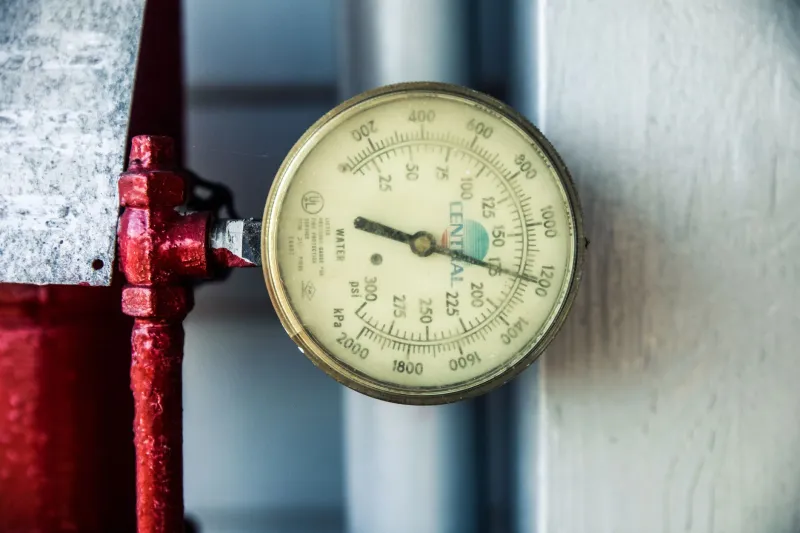
Pressure. Pressure at the pump outlet and downstream of treatment should remain within a sensible band. Falling pressure may signal a clogged filter or failing pump. Excessive fluctuation may indicate pressure vessel problems. Pressure data also helps distinguish a supply problem from a distribution problem.
Turbidity. Turbidity is a useful early indicator of sediment movement, source disturbance or filter breakthrough. A rising trend after heavy rain, or a sudden change without explanation, should trigger investigation before contaminated water reaches taps. Turbidity monitoring does not replace laboratory testing, but it can tell you when to test sooner.
Treatment performance. UV systems should log lamp hours and, where available, intensity. Filters should have differential pressure monitoring or a disciplined replacement record. Softeners need salt-level checks. Chlorination, if used, needs dose and residual records. The point is not to create a dashboard for its own sake, but to make treatment visible between service visits.
Alerts that earn their keep
A monitoring system should be designed around action, not alarm volume. Tiered alerts work better than a single siren. A low tank level might generate a notification; a pump running beyond its normal maximum might generate an urgent call; loss of power or connectivity should itself be an alert, because a silent system is not a safe system.
Thresholds should be set after a baseline period. Every property has its own rhythm. A small domestic supply may run for short periods several times a day; a farm or holiday let may have strong seasonal peaks. The useful question is not whether a value is unusual in absolute terms, but whether it is unusual for this system, at this time of year, with this occupancy.
Testing duties and records
Monitoring complements regulatory testing; it does not replace it. In England, the Private Water Supplies Regulations 2016 place duties on local authorities to risk-assess and monitor private supplies, with more stringent requirements for supplies serving commercial premises or public activities. Wales, Scotland and Northern Ireland have equivalent frameworks. If a supply serves a holiday let, a food business, employees or the public, the responsible person should confirm the local authority's sampling regime and keep clear records of results, treatment maintenance and any remedial work.
Laboratory analysis remains essential for microbiological and chemical parameters. Sensors can indicate that something has changed; they cannot confirm that water is safe to drink. A sensible regime uses both: continuous or regular instrumentation for early warning, and accredited testing for compliance and assurance.
A simple seasonal checklist
Spring. Inspect the source chamber and covers. Clear drains and check that surface water is diverted away. Service sediment filters. Confirm that treatment logs are complete and that any sampling due has been arranged.
Summer. Watch for peak demand, especially in holiday lets and businesses. Check tank levels and pump run-times against the previous season. Confirm UV lamp hours and replace where due. If irrigation or livestock demand rises, make sure the supply can meet it without excessive pump run-time.
Autumn. Clear leaf litter and debris from around chambers and tanks. Check turbidity trends after heavy rain. Inspect insulation before the first cold snap and confirm that exposed pipework and pressure vessels are protected.
Winter. Test the freeze plan. Confirm that power-loss alerts are working and that battery backup, if fitted, is healthy. Exercise isolation valves. Keep a manual dip-check routine in case telemetry fails, and ensure someone knows what to do if an alert arrives while the property is empty.
A private supply is not a lesser form of water service; it is a small utility managed by its owner. Instrumentation gives that utility a voice. The well does not need to announce a drought. A pump that runs too long, a tank that falls too low or a filter that clogs too quickly can say enough, provided someone is listening.