Between the Bulk Tank and the Trough: Water Discipline on Small Dairy Holdings
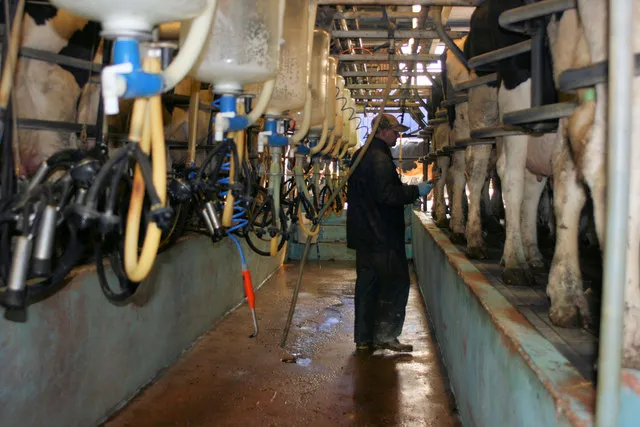
Photo: Nick Chipchase, CC BY-SA 2.0, via Wikimedia Commons
Water is not a background utility on a dairy farm
On a small dairy holding, water arrives from a mains connection, a borehole or a storage tank and then goes to work. It cools milk in the plate cooler, washes the parlour, fills troughs, cleans the yard and supports the bulk tank. A leak in the parlour or a pressure drop at the plate cooler is not just a utility bill; it can affect milk quality, hygiene and livestock health. Yet many farms have no more water monitoring than a single meter at the boundary and a visual check when something looks wrong.
The aim of a farm water routine is not to install a facsimile of a factory SCADA system. It is to make the main circuits visible, set a few thresholds and give one person a ten-minute daily check that actually happens.
Submetering the parlour washdown
The washdown circuit is usually the largest and most variable water user on a dairy farm. It runs at set times, uses hot water and chemicals, and is easy to overuse. A submeter on the washdown line, or on the hot water feed to the parlour, establishes a baseline for each wash. If the volume per wash rises, a hose may be left running, a valve may be passing or a spray ball may be worn. If the volume falls, the wash may be ineffective, which is a hygiene risk rather than a saving.
A simple run-time log on the wash pump, compared with the meter, helps separate a longer wash from a leaking line. The same meter can reveal a burst pipe overnight if the washdown circuit is normally quiet.
Cooling circuits and the plate cooler
The plate cooler uses water to bring milk down to storage temperature quickly. It is a high-flow, once-through circuit on many farms, and a failed valve or a corroded plate can waste a large volume of water while still appearing to work. Monitor the flow and the temperature difference across the cooler. If the milk outlet temperature rises while the water flow is normal, the plates may be fouled. If the water flow rises while the milk temperature is stable, a valve may be passing.
A pressure gauge on the water side is a cheap early warning. A drop in pressure at the cooler can indicate a blockage or a supply problem; a rise can indicate a restriction downstream. Neither replaces a visual check, but both make the check targeted.
Frost and exposed pipework
Dairy farms are full of exposed pipework: yard taps, trough feeds, parlour lines, washdown points and tank room connections. In a cold snap, the first sign of trouble is often a burst pipe after thaw, not a frozen tap. Lagging, trace heating and drain-down points should be checked before winter. Troughs in exposed fields are especially vulnerable.
A frost stat in the pump room or tank room is useful, but it only protects the room it is in. A temperature sensor on the coldest exposed line, or a simple min/max thermometer, gives a better picture. If a line cannot be drained, a low-temperature alert can prompt a trickle or a heater before the ice forms.
Boreholes, storage tanks and pump run-time
A borehole pump that runs dry is expensive to replace. A storage tank that overflows is waste and a slip hazard. Monitor borehole run-time, tank level and pressure. If the pump runs longer than usual for the same demand, the water table may have dropped, a non-return valve may be passing or a leak may have developed. If the tank level falls faster than the refill rate, demand has changed or a float valve has failed.
A high-level alarm on the storage tank is a basic protection against overflow. A low-level alarm protects the pump and the supply. Both should be visible to whoever is on the farm, not buried in a control panel.
A ten-minute daily check
Farms without a facilities team need a routine that fits the working day. A ten-minute check after milking can cover the meter readings, a walk past the parlour, the plate cooler, the tank room and the troughs. Look for wet patches, listen for running water when nothing should be running, and read the meters. Record the figures in a notebook or a simple spreadsheet.
The value of the check is the baseline. After a fortnight, the person doing it will know what normal looks like. A rise in the night reading, a washdown that uses more water than last week or a pump that runs for longer are all visible without a control room.
Alarms and remote monitoring
Remote monitoring is useful on a farm because the person responsible may be in a field, in the parlour or asleep. SMS alerts for high flow, low pressure, tank level and frost risk can prompt a check before a small problem becomes a burst pipe. But alarms must be few and meaningful. A sensor that sends a message every time a trough fills will be ignored.
Where a farm has a borehole and a storage tank, a simple telemetry unit can log pump run-time and tank level without a full building management system. The data can be reviewed weekly and used to justify repairs or adjustments.
Conclusion
On a small dairy farm, water is an input, a hygiene control and a cooling medium. The parlour washdown, the plate cooler, the troughs and the borehole are all part of one system. Submetering the main circuits, checking the exposed pipework before winter and keeping a ten-minute daily log will catch most problems before they cost money or compromise milk quality.