Harvested Water, Hidden Hazards: Monitoring Rainwater and Greywater Systems in UK Homes
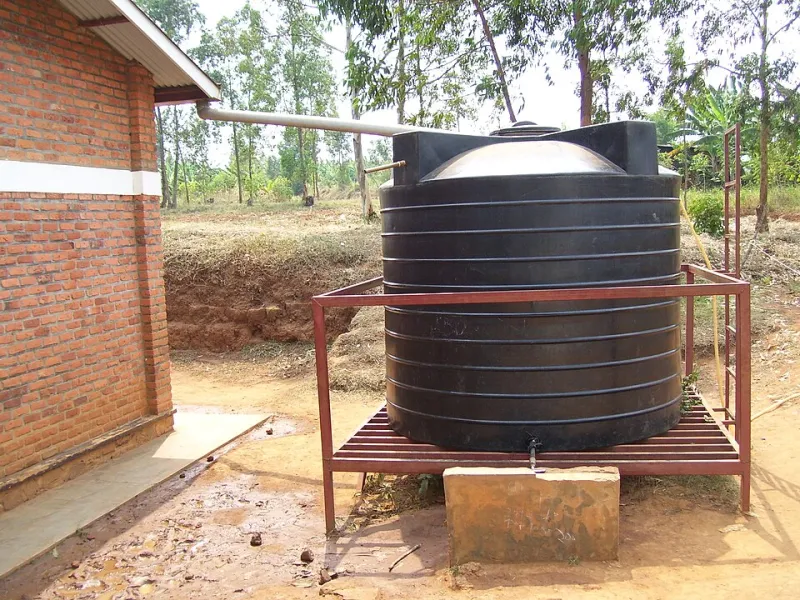
Photo: SuSanA Secretariat, CC BY 2.0, via Wikimedia Commons
Rainwater harvesting and greywater recycling are no longer niche additions to the British home. They appear in new-build specifications, retrofit packages and garden irrigation projects, often presented as straightforward sustainability measures. The operational reality is less simple. A harvested-water system is a small water utility in its own right, with a tank, a pump, valves, filters and a non-potable distribution loop. When it fails, it rarely fails in the manner that a conventional leak detector expects.
Most domestic leak detection is built around the mains supply. It watches for continuous flow where there should be none, or for water in places where water should never be. Harvested systems break those assumptions. They may sit idle for days, then demand sudden top-ups during dry weather. They may overflow without any mains water entering the property. They may run a pump without moving a litre. A sensible monitoring strategy therefore begins by recognising that harvested water is a separate system with separate failure modes.
Where harvested-water systems fail quietly
Tank overflow is among the most common and least visible problems. A float valve can stick, a level sensor can drift, or a pump can fail during heavy rainfall when the tank is already full. The result is water sent to a drain or soaked into the ground near the property, sometimes for weeks. In a confined plant enclosure, the same overflow can cause damp, corrosion and electrical risk.
Pump faults are equally easy to overlook. A pump may run dry because the tank has emptied, or it may run continuously because an irrigation valve has stuck open. Either condition can shorten the pump's life, yet neither necessarily produces the flow signature that a mains leak detector is looking for. Slow leaks around pump seals, valve glands and buried irrigation lines add another layer of loss that may only become apparent when the garden shows signs of saturation.
Cross-connection is the risk that deserves the most serious attention. Where a harvested system includes a mains top-up, the arrangement must maintain a proper air gap or a suitable mechanical backflow prevention device. If that protection is compromised, non-potable water can enter the wholesome supply. This is not merely a plumbing defect; it is a regulatory and public health issue under the water fittings regime in the UK. Monitoring cannot substitute for correct design, commissioning and annual testing, but it can provide an early warning that a top-up is occurring when it should not be.
Non-potable loops also create identification risk. Pipework should be clearly marked, and any subsequent alteration by a plumber or landscaper should be treated as a potential misconnection. A standard flow-based detector will not understand a greywater loop that feeds toilets or a garden tap. It may see no activity at all, or it may interpret normal irrigation as an anomaly.
Monitoring points that earn their place
A proportionate system starts with tank level. A continuous level sensor or, at minimum, a high-level float switch can warn of overflow risk before water reaches the ground. The signal should be visible locally and, where practical, sent as a notification.
Pump run-time and current draw are underused indicators. A pump that runs far longer than its normal irrigation cycle, or draws current when the tank is empty, is telling a clear story. A current clamp or a smart pump controller can turn that story into an alert without requiring a full building management system.
A flow meter on the mains top-up line is especially valuable. It can reveal a tank that is being replenished continuously because of a leak or a stuck valve. If the top-up line has a solenoid valve, the same meter can support a simple rule: if top-up flow continues beyond a set duration, close the valve and raise an alarm. That is more targeted than shutting off the whole house supply because a garden tank is misbehaving.
A leak sensor in the plant enclosure or near the tank base is inexpensive and useful. It will not detect a buried irrigation leak, but it will catch pump seal failures, overflowing tanks and valve drips. For systems serving toilets or other internal non-potable outlets, a flow meter on the distribution loop can help distinguish normal use from a running leak.
If the system includes filtration or ultraviolet treatment, status outputs matter. A blocked filter reduces yield and can cause pump strain; a failed UV lamp may create a microbiological risk if the water is used for anything beyond garden irrigation. These are not leak signals, but they belong in the same monitoring dashboard.
What ordinary leak detectors miss
A conventional smart leak detector usually monitors the mains incoming supply. It may learn that a household uses very little water overnight and flag continuous flow. That logic is useful, but it does not cover a tank overflow, which is an outflow rather than an inflow. It does not cover a pump running dry. It does not cover a greywater loop that is fed from a tank rather than the mains.
This is why harvested-water monitoring should not be bolted onto a whole-house leak detector and left at that. The better approach is to treat the harvested system as a distinct asset with its own sensors and its own alarm thresholds. The mains shut-off valve can still play a role, particularly where a continuous top-up suggests a failed float valve, but it should not be the only line of defence.
A proportionate hierarchy for UK homes
The first tier is local warning. A high-level alarm, a pump fault indication and a leak puck in the plant room cover the most likely failures without requiring an internet connection. The second tier adds connectivity: notifications for tank level, top-up flow and pump run-time, plus a log that can be reviewed after a heavy rainfall event or a dry spell. The third tier introduces limited automation, such as isolating the mains top-up or cutting power to a pump that is running dry.
What homeowners should avoid is over-automation. A garden tank does not need the same shut-off logic as a pressurised domestic supply pipe. Isolating the wrong valve can leave a greywater system stagnant, or prevent legitimate irrigation during a heatwave. The aim is to detect and notify, then isolate only the specific circuit that is misbehaving.
Commissioning and seasonal rhythm
Monitoring is only as good as the maintenance routine around it. Before winter, check the tank, pipework and pump for frost risk, and confirm that overflow routes are clear. In spring, test the pump, clean or replace filters, verify UV operation and check the backflow arrangement. After prolonged rain, inspect the overflow. After a dry period, confirm that top-up behaviour is normal. Annual backflow testing should be recorded, not assumed.
Harvested water is a valuable resource, and the technology behind it is maturing. But it deserves to be monitored as what it is: a non-potable water system with its own pumps, valves and risks. A modest set of well-chosen sensors, combined with proper backflow protection and a seasonal check, will catch most of the quiet failures long before they become expensive ones.